FOR ALL INTERNATIONAL ORDERS, PLEASE CONTACT US FOR A QUOTE.
WALANGKURA NAPANANGKA
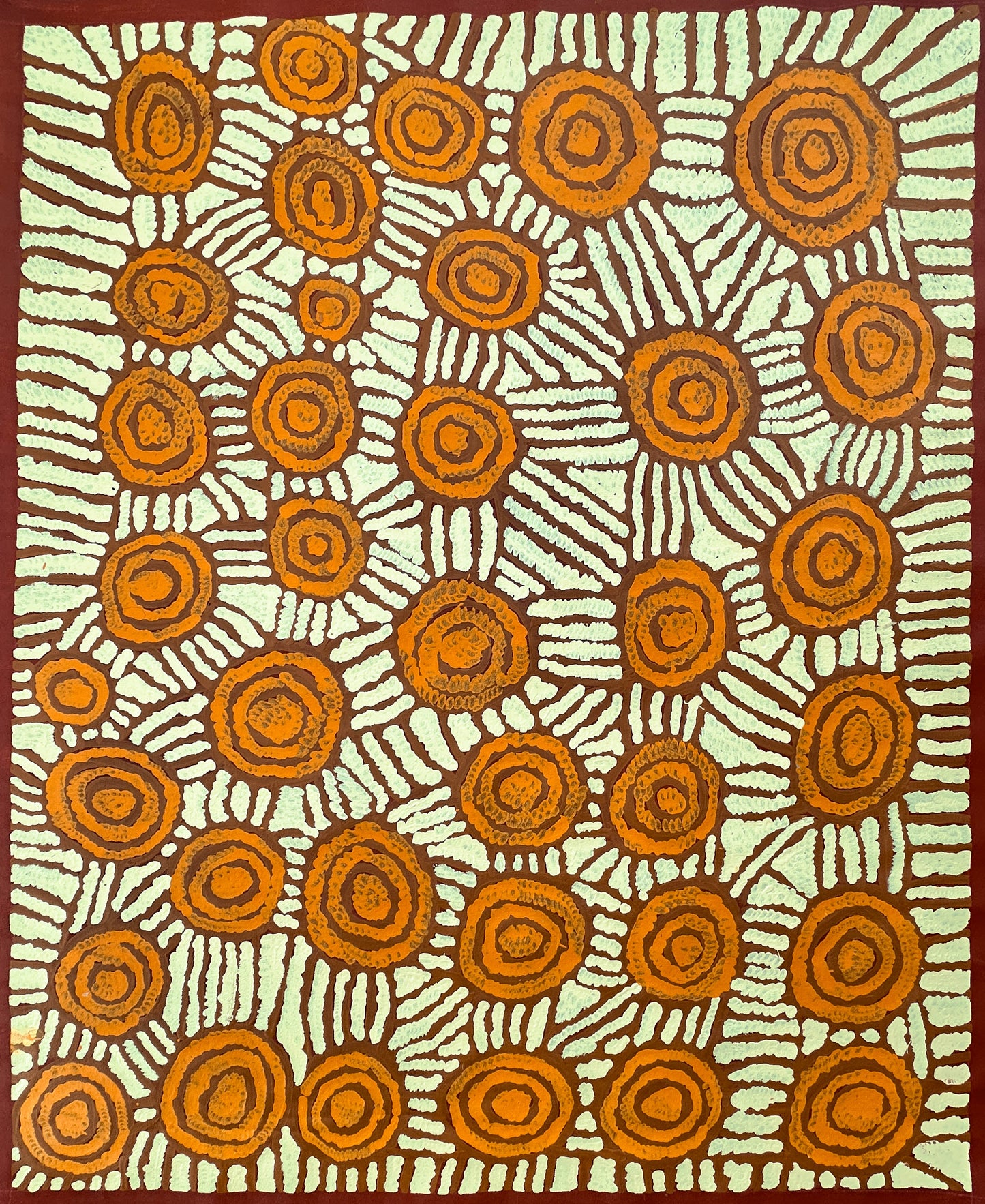
TITLE: TRAVELS OF KUTUNGKA NAPANANGKA
ACRYLIC ON LINEN
123CM X 100CM
WALANGKURA HAS SIGNED THE PAINTING A WORKING PHOTOS WILL BE PROVIDED
REF#WN499
DOB: (c1946-2014) Tjitururrnga, Gibson Desert (NT–WA border)
Known as: Walangkura Napangka Skin Name: Napanangka
Language: Pintupi
Dreaming’s: Travels of Kutungka Napanangka (ancestral woman's journey across sandhill and rockhole country) including Women's Ceremony, Hair-String Skirts, and Bush Tucker — Desert Raisin (Kampurarrpa); Rockhole and Sandhill sites including Umari, Yunala, Malparingya, Ngartannga, Tjintjintjin, Lupul and Kurriuntu; and My Country
Walangkura Napanangka was born in the bush at Tjitururrnga, west of Kintore in the Gibson Desert, right on the border country between the Northern Territory and Western Australia. She belonged to the last generation of Pintupi people who really grew up in the desert walking with her family, living off the land, long before there was ever a settlement to go to.
As a girl, she and her family walked hundreds of kilometres out of that remote country into the settlement of Haasts Bluff (Ikuntji), drawn in by the promise of food and water. It wasn't an easy shift, leaving the only life she knew for one that was completely unfamiliar. Her mother, Inyuwa Nampitjinpa, and her half-sister, Pirrmangka Napanangka (who passed away in 2001), made that same journey, and both went on to become painters too.
When the outstation movement brought people back to their own country in 1981, Walangkura resettled at Kintore. It was there, in the mid-1990s, that she joined the historic women's collaborative canvas project a real turning point for the senior Pintupi women, painting together and reconnecting with ceremony and story on their own terms. Papunya Tula Artists took her on shortly after, and she became one of their most senior and respected women painters.
In her later years she lived between Kintore and Kiwirrkura with her husband and fellow artist, Johnny Yungut Tjupurrula, and their six children, until her passing in 2014.
Dreamings (Tjukurrpa)
Her main and most consistently cited Dreaming is the Travels of Kutungka Napanangka (also spelled Katungka) an ancestral woman who journeyed east from her homeland in the Gibson Desert, across sandhill country, to a series of rockhole and soakage sites south-west of Mt Liebig. Depending on which stretch of the journey a particular painting shows, it may be named for a specific site along the way places like Umari, Yunala, Malparingya, Ngartannga, Lupul, Kurriuntu, and Tjintjintjin all appear across her work.
Alongside this, many of her paintings depict Women's Ceremony gatherings of ancestral women at these same rockhole sites, tied to women's ceremonial business she carried as a senior law woman, where they sang, danced, made hair-string skirts, and gathered desert raisin (kampurarrpa) as part of ceremonial preparation.
Because Kutungka is a woman's Dreaming tied to restricted ceremonial knowledge, most sources are understandably light on detail beyond "the travels of the ancestral woman" that reflects normal cultural protocol around women's business, not a gap in the story.
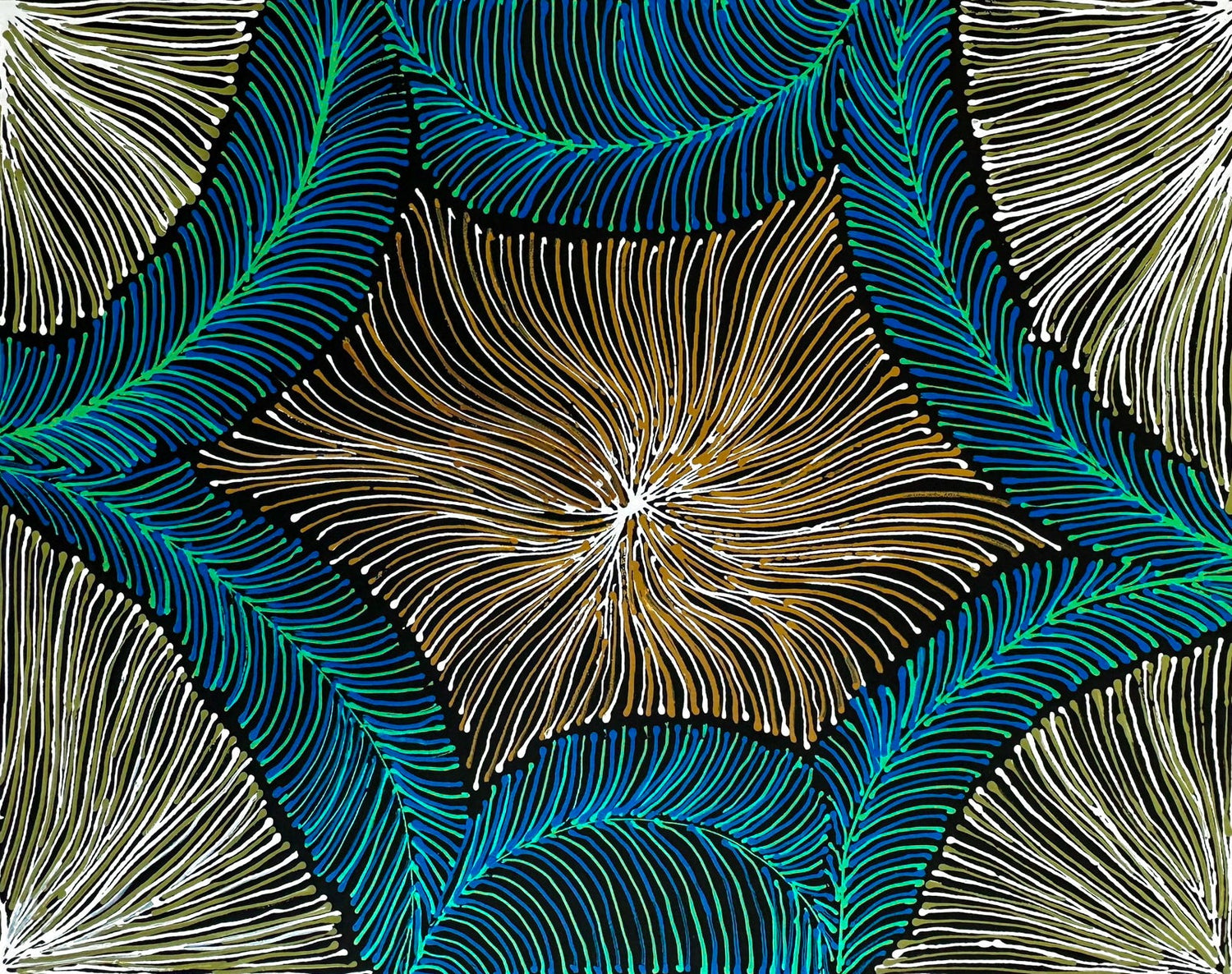
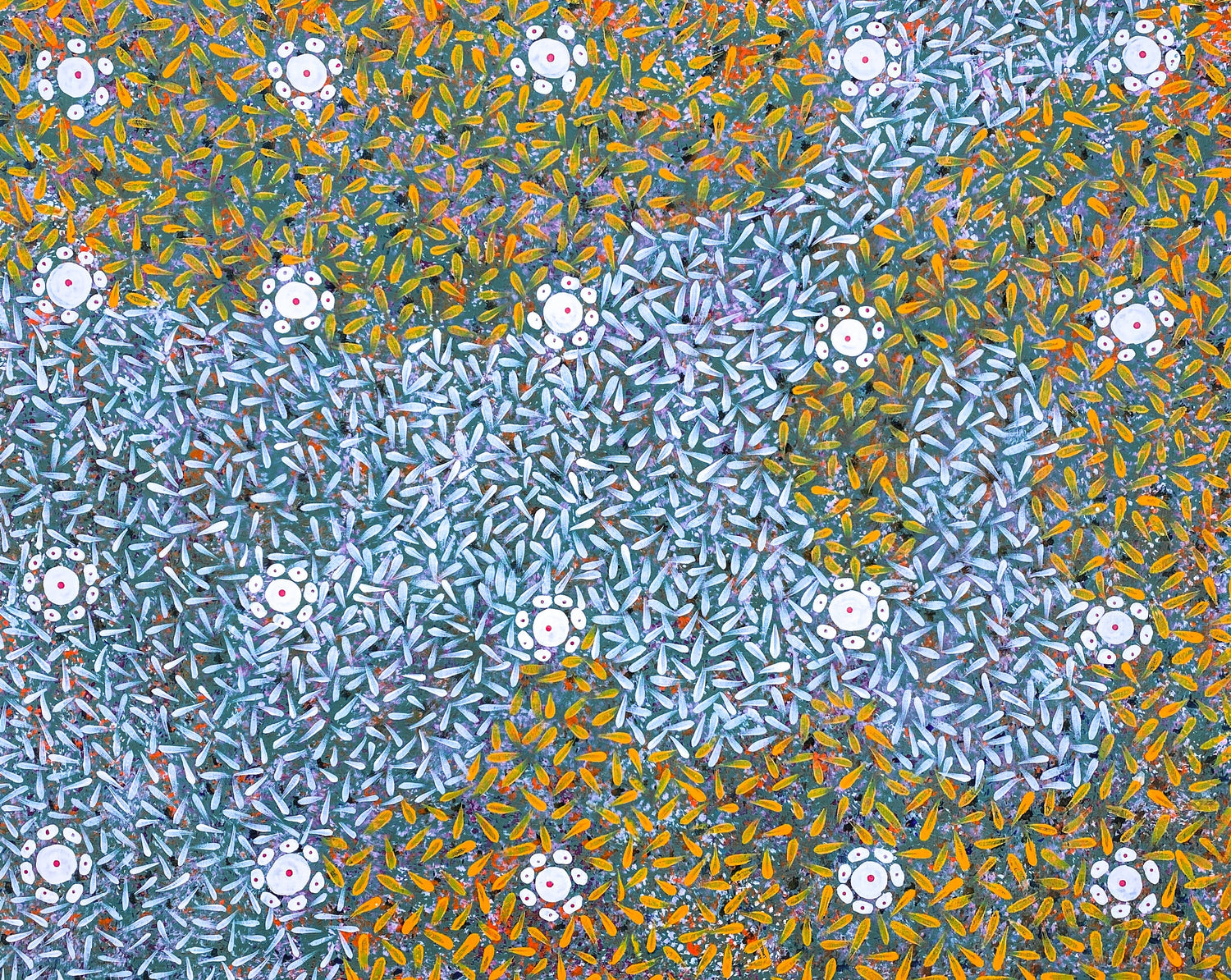
Visually, her work is instantly recognisable: dense fields of dotting in warm sandy oranges against deep reds, blacks and ochres, with the rockholes shown as concentric roundels and the surrounding sandhill country rendered in sweeping parallel lines.
Selected Exhibitions
- 1997–2002 — Araluen Arts Centre, Alice Springs
- 1998 — Sztuka Aborygenów (Art of the Aborigines), Warsaw, Poland
- 1999 — Flinders University Art Museum, Adelaide
- 2000 — Papunya Tula: Genesis and Genius, Art Gallery of New South Wales, Sydney
- 2000 — Galerie Bahr, Speyer, Germany
- 2001 — Dreamscapes: Contemporary Desert Art, Mostings Hus, Frederiksberg, Denmark
- 2003 — Mythology and Reality, S.H. Ervin Gallery, Sydney
- 2005 — 22nd National Aboriginal & Torres Strait Islander Art Award (NATSIAA), Museum and Art Gallery of the Northern Territory, Darwin — finalist
- 2005 — 1st Prize, Redlands Westpac Art Prize
- 2010 — Circles in the Sand: Aboriginal Art from Central Australia in the Kluge-Ruhe Collection, Australian Embassy, Washington DC
A note on titles: You'll sometimes see the same or a very similar painting listed under different names across different galleries "My Country," "Women's Ceremony," "Travels of Kutungka Napanangka," or a specific site name like "Umari" or "Rockholes." A single painting can depict a rockhole site that belongs to the artist's own country ("My Country"), while also marking a place where women gathered for ceremony ("Women's Ceremony"), which may in turn sit along the path of an ancestral journey ("Travels of Kutungka"). The story, the ceremony, and the country are woven together rather than separate categories.
This painting was purchased directly from Walangkura, and a gallery certificate of authenticity will be provided with the sale, along with working photos.