DOB: c.1964. Near Tjukurla (Gibson Desert), Western Australia
Skin name: Napangarti
Language: Ngaanyatjarra
Country: Tjukurla, Gibson Desert, Western Australia
Dreaming's: Minyma Tingari (Women's Ceremony), Tali (Sandhills), Puli (Rock Formations), Bush Apple Ceremony, My Country
Barbara Napangarti Reid was born around 1964 in the Gibson Desert of Western Australia, in country near Tjukurla, a long way north west of Docker River and about as remote as this continent gets. Her language is Ngaanyatjarra, one of the eight desert languages whose speakers share the work of looking after this enormous stretch of country.
Napangarti is her skin name. Skin sets out where a person sits in the kinship system, who they are related to, what ceremony they hold and who they may marry, and it passes down through the female line. Barbara's own daughter Suzie is Nangala, which is where a Napangarti woman's daughter lands. Naming skin is how a person is properly placed in the desert, and it belongs alongside her name.
Barbara comes from a family with deep standing in Western Desert painting. Her father's mother came from Pintupi country, and that grandmother's younger sister was the noted painter Kai Kai Nampitjinpa, so Barbara carries a Pintupi connection running alongside her Ngaanyatjarra one. She is also related to the late Ningura Napurrula, one of the great Pintupi painters of Kintore, and has painted the Wirrulnga birthing ceremony story alongside Ningura's daughters.
She was still a baby in arms when her family left that country on foot. They walked out through Tjukurla, heading toward Lupul and on in the direction of Uluru, an immense distance to cover carrying a child. Somewhere south east of Docker River her father stopped an army truck travelling through. This was the era when government policy was to bring desert families in off their homelands, and the truck took them on to the settlement at Papunya. Barbara lived there until she was about sixteen, then made her own way to Alice Springs. She began painting in 1987 with the Centre for Aboriginal Artists, spent some years in Adelaide, and has since returned to Alice Springs, where she paints today.
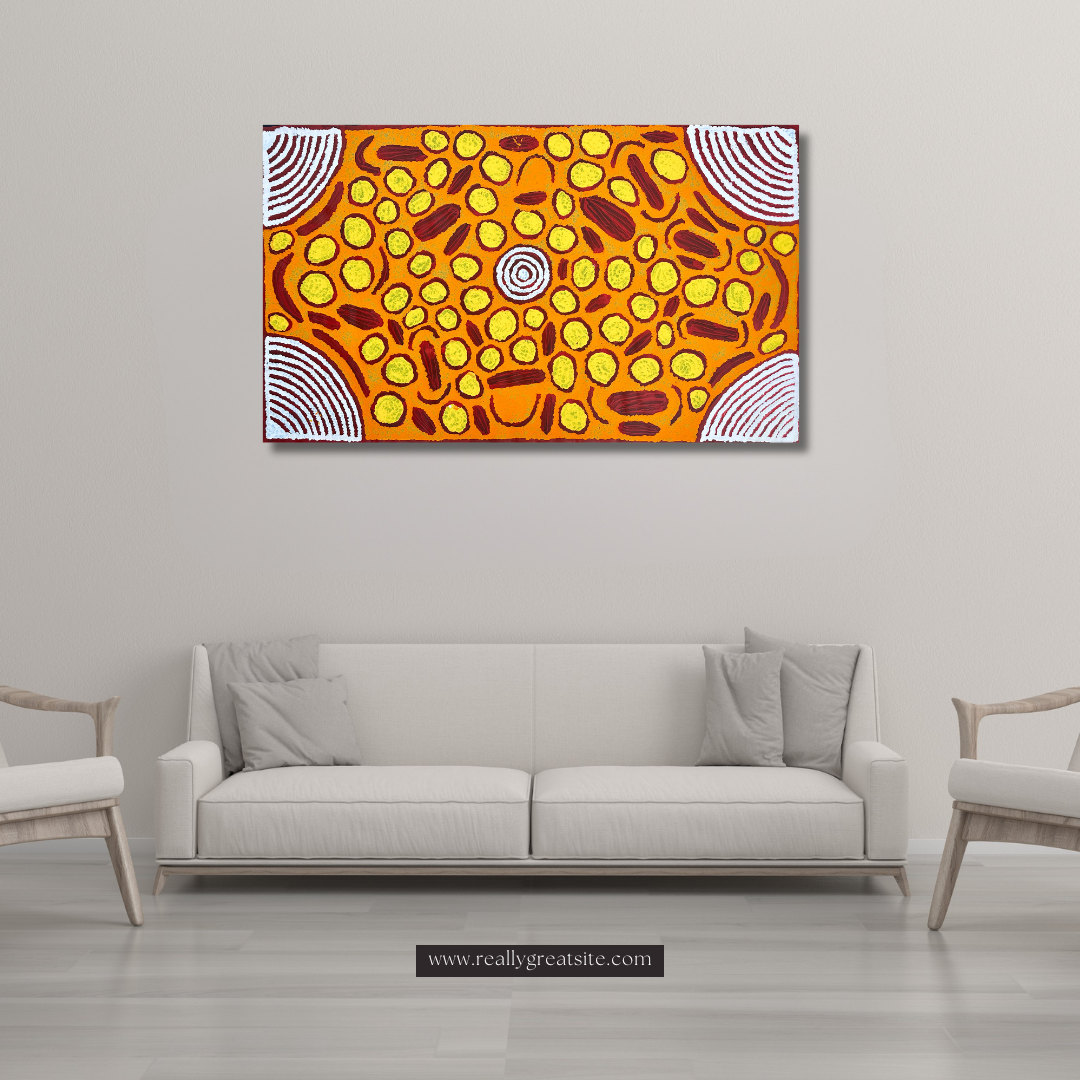
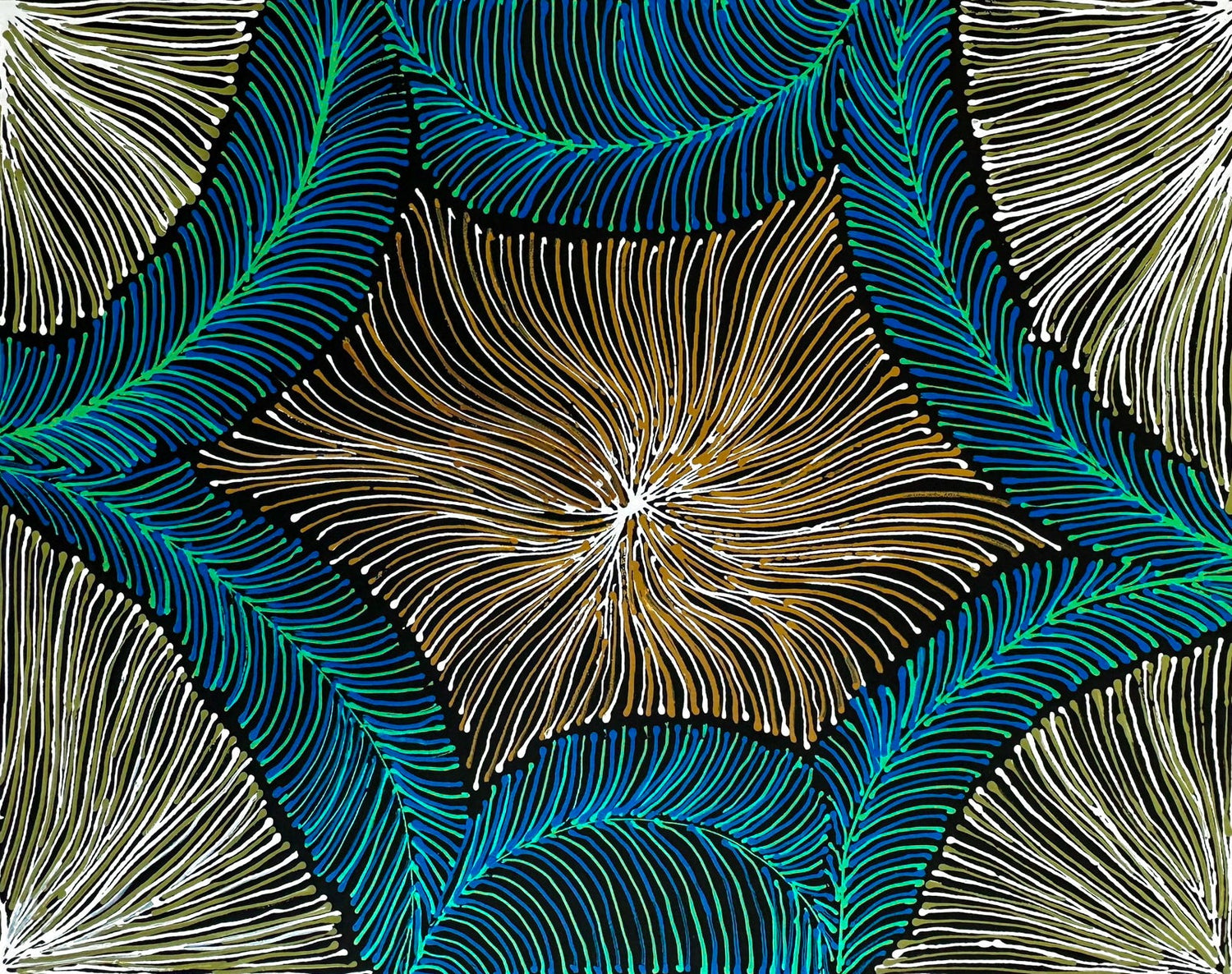
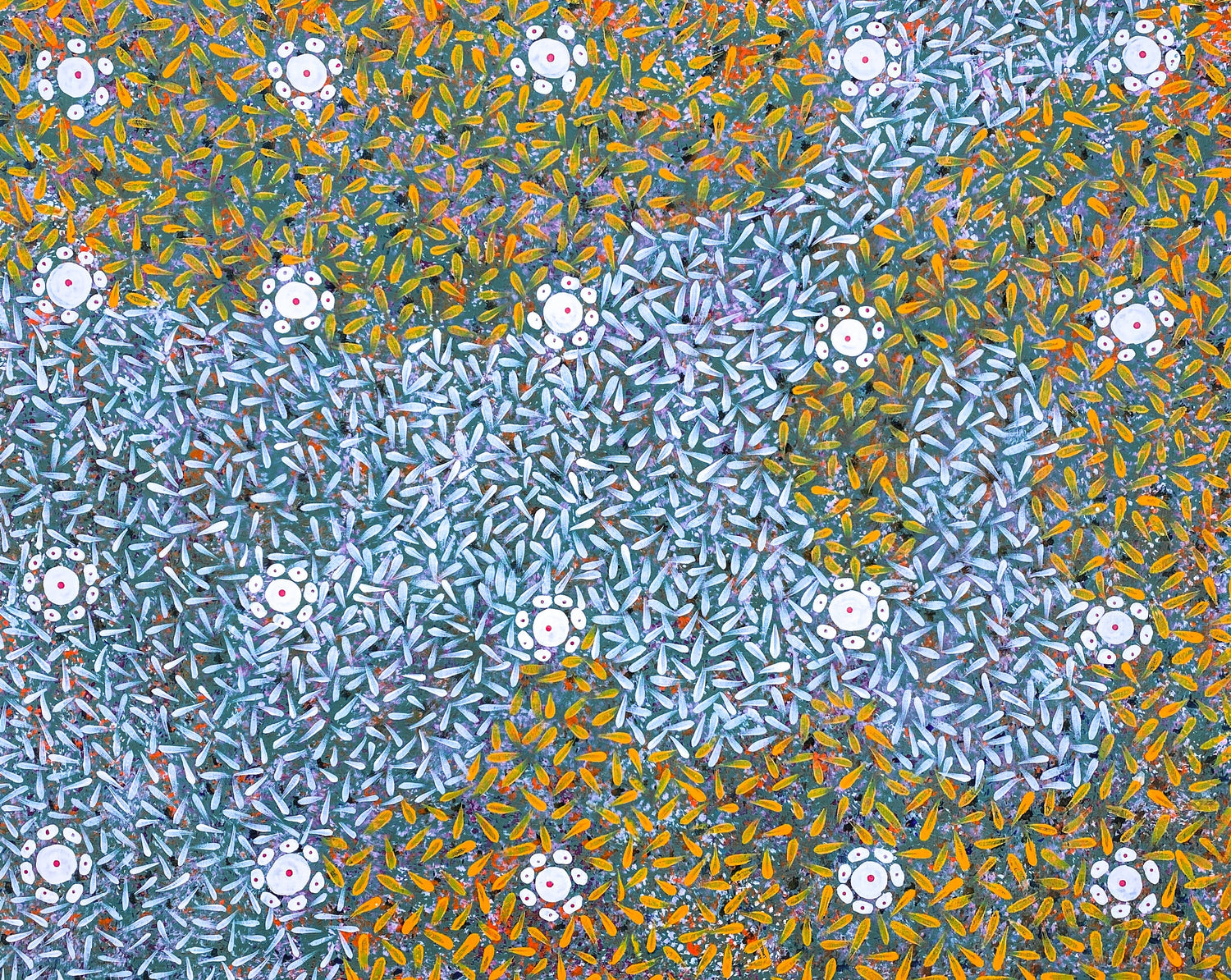
Her country is the reason her paintings look the way they do. This is ancient ground, a place of long red sandhills running one behind the other to the horizon, weathered rock formations standing up out of the spinifex, and rockholes holding water in country that gives up very little of it. Like many desert artists, Barbara paints it from above, the way it is held in memory and in song rather than the way it is seen standing in it. The tali roll across the canvas in bands, the puli sit as solid shapes among them, and the rockholes and bush foods are marked where they truly are. It is a map, a story and a piece of Country all at once.
Barbara's hand is unmistakable. She lays paint on thick and builds it up in layers, so the surface carries real weight and texture, and the result reads as abstract and utterly traditional at the same time. Her palette is her own, tonal and lyrical, and her work is sought after by collectors in Australia and overseas.
Her Dreamings
- Minyma Tingari (Women's Ceremony) — The Tingari are ancestral beings who travelled immense distances across the Western Desert in the creation time, holding ceremony, singing and teaching as they went, and forming the sandhills, rockholes and rock formations as they passed. Barbara paints the women's side of that cycle. The U shapes on the canvas are the women themselves, seated, and the broader curved forms are the windbreaks built to shelter behind. Much of the Tingari is restricted, and what appears on canvas is only what may be shown publicly.
- Tali (Sandhills) — The long parallel dunes that run through Tjukurla country. They are not empty ground. They hold the shape of the ancestral journeys, they shelter the bush foods, and they change colour hour by hour through the day. Barbara paints them in bands that ripple across the whole canvas.
- Puli (Rock Formations) — The outcrops and rocky rises standing above the sandhill country, some of them ceremonial sites, all of them named and sung. They are the fixed points in the landscape; the places people travel between and orient themselves by.
- Bush Apple Ceremony — The women's ceremony connected to pintalypa, a native bush apple that grows in this country. It is one of the foods gathered by the women around the sites near Tjukurla, and the ceremony belongs with the gathering of it.
- My Country — Barbara's own homelands around Tjukurla, painted as a whole. Sandhills, rockholes, rock formations and the bush foods that grow between them, laid out as she carries them.
Purchased directly from Barbara and signed by the artist. Supplied with a gallery Certificate of Authenticity.